Epoxy-based UV adhesive

Epoxy-based UV adhesive is a cationic light-curing system; it is a single-component adhesive formulated with epoxy resin or modified epoxy oligomers as the matrix, combined with initiators such as photo-generating acid agents. When exposed to ultraviolet light, it generates active cations that initiate the ring-opening polymerisation of the epoxy groups, thereby curing the adhesive. It combines the efficiency of light-curing—with “second-level setting”—with the high strength and low shrinkage characteristics of epoxy resins, making it another important choice for high-end, precision light-curing bonding applications.

Product Description

Key Features

Its most notable feature lies inThe curing reaction may continue even after the light is turned off(post-curing or dark curing), which effectively resolves the curing challenge posed by shadowed areas that cannot be reached by light. Furthermore, it retains the excellent adhesion, extremely low volumetric shrinkage and outstanding resistance to chemicals and high temperatures characteristic of epoxy resins. It is free from the oxygen-inhibited polymerisation effect and is insensitive to moisture during the curing process, making it particularly suitable for the precision bonding of complex-shaped components.


Typical Use Cases

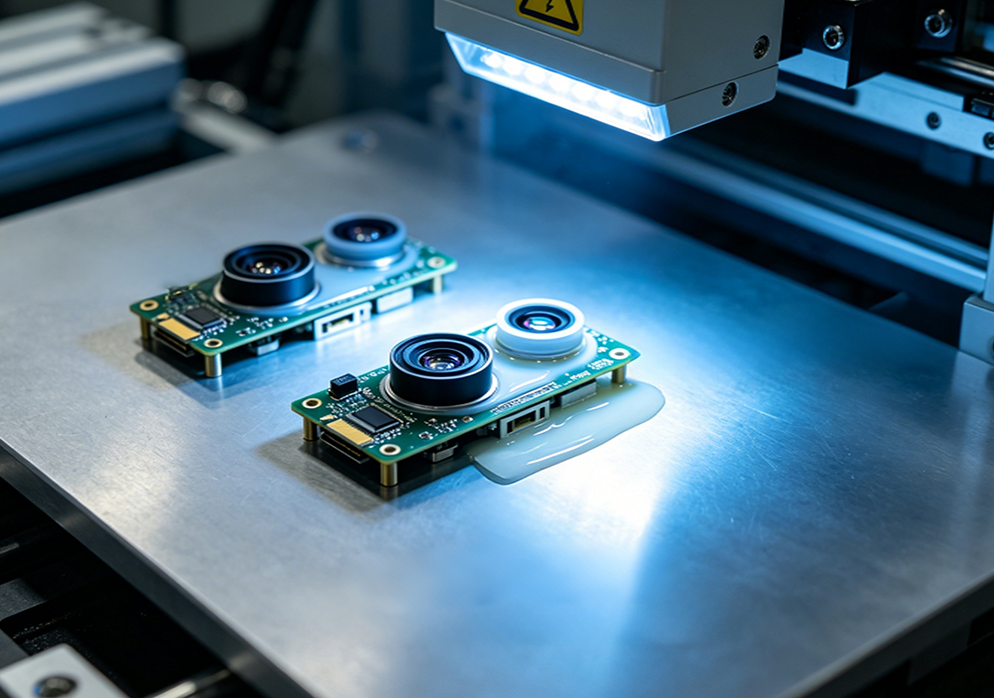
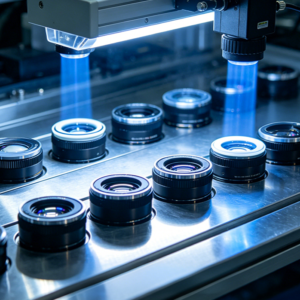
 High-end electronic packaging: Chip bonding and lens mount fixation for CMOS/CCD camera modules, addressing the challenge of curing in blind spots.

✅ Semiconductors and Micro-Electro-Mechanical Systems: Chip underfill and encapsulation, wafer-level bonding of MEMS sensors, utilising its low shrinkage rate to prevent deformation of precision structures.

✅ Optical communication components: The precise alignment and bonding of active components such as fibre collimators and wavelength division multiplexers require dimensional stability over the long term under varying temperature and humidity conditions.

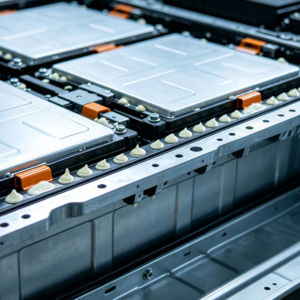
✅ Automotive Electronics: The sealing and structural bonding of safety sensors, tyre pressure monitoring modules and ADAS camera modules must be capable of withstanding high temperatures and harsh environments.

✅ Medical devices: Bonding and encapsulation of precision catheters and endoscope assemblies requiring high reliability and resistance to repeated disinfection.

✅ Advanced Manufacturing: Bonding of microfluidic chips, as well as other fields with the most stringent requirements for shadow curing, low shrinkage and high-temperature dimensional stability.