Conformal Coating
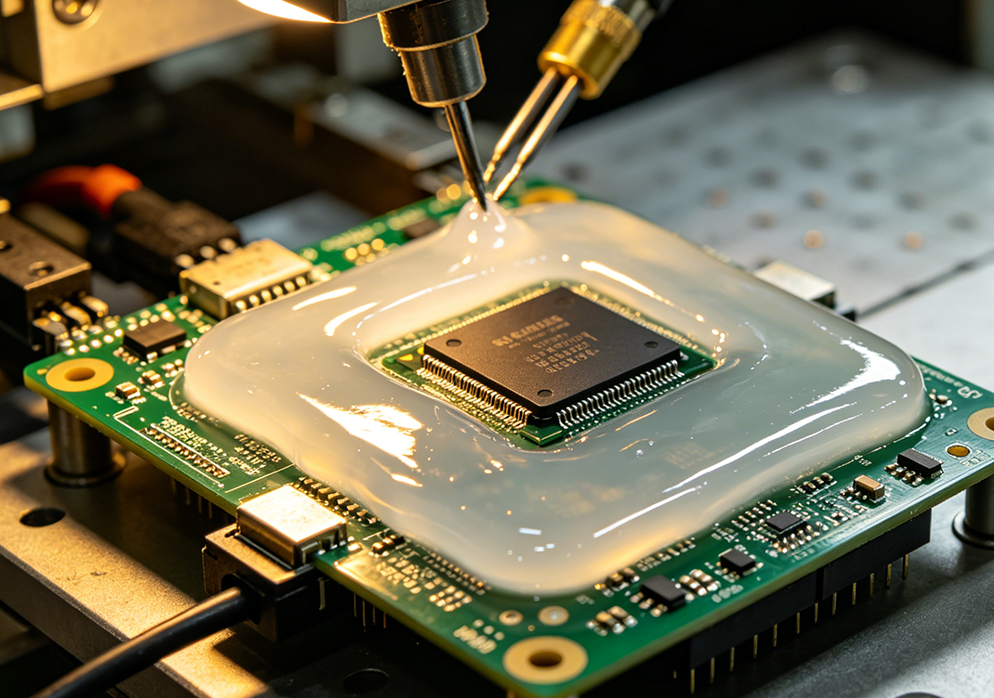
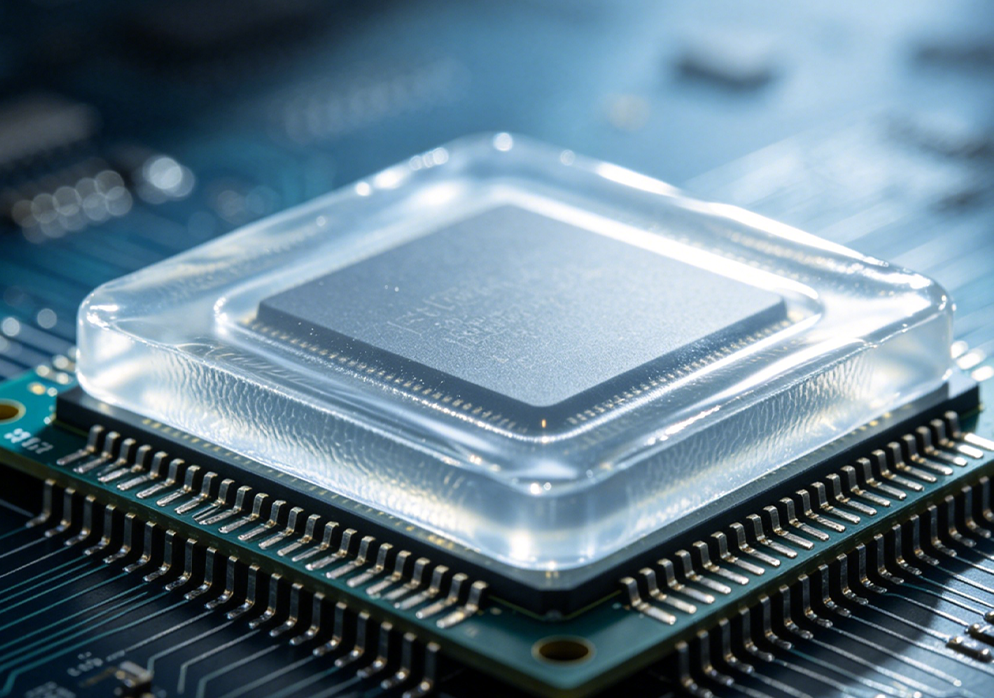
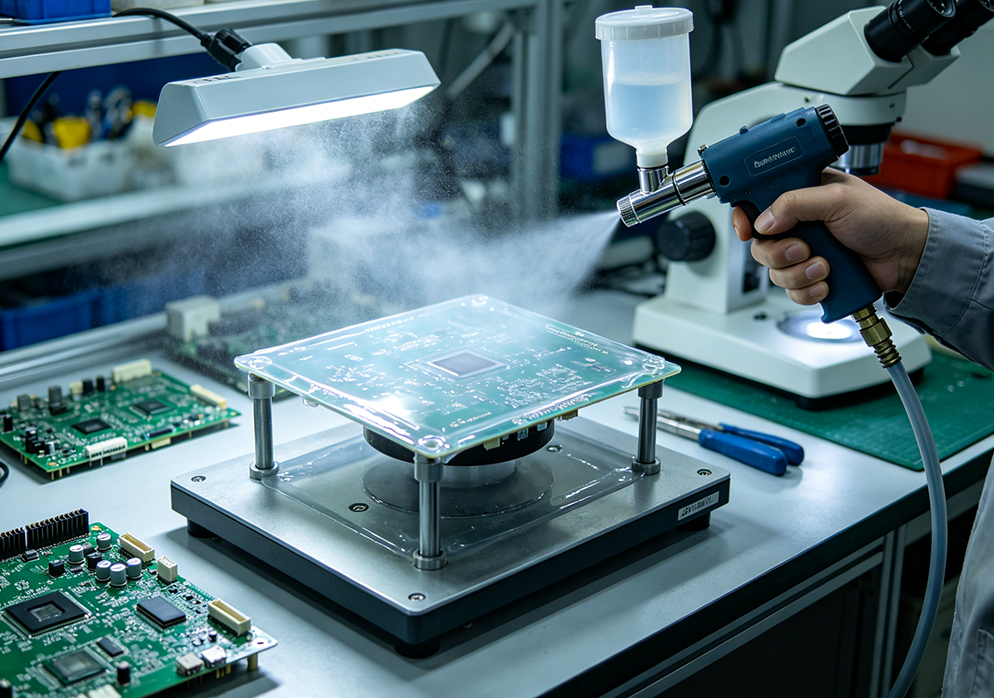
Conformal coating is a specialised protective coating applied to the surfaces of printed circuit boards (PCBs) and electronic components. Its primary function is to form a transparent or semi-transparent film on the surface of the circuit board, thereby providing “three-proof” protection for electronic components. This film effectively resists moisture condensation, corrosion from acids, alkalis and salts, fungal growth, and, to a certain extent, dust contamination and chemical erosion, thereby significantly enhancing the reliability and service life of electronic equipment in harsh environments.
Single-component addition-curing sealant
A one-component addition-curing sealant is a single-component sealing material that cures via an addition reaction using a silicone matrix; it requires no additional curing agent and can cure either when heated or at room temperature.
Single-component room-temperature curing adhesive
Single-component, room-temperature-curing silicone is an organic silicone material that requires no additional curing agent; it cures upon contact with air at room temperature by absorbing moisture from the atmosphere.
Single-component, room-temperature thermal adhesive
Single-component, room-temperature thermal conductive adhesive is a functional adhesive with a silicone matrix and high thermal conductivity; it requires no additional curing agent and cures upon contact with moisture in the air at room temperature.
Two-component addition-curing encapsulant
A two-component addition-curing encapsulant is a silicone encapsulation material comprising two liquid components, A and B, which cure after being mixed in the correct proportions.
Two-component condensation-curing encapsulant
Two-component condensation-curing encapsulant consists ofResin A (base resin) 和Part B (hardener) It consists of two parts; mix them thoroughly in the specified ratio before use.
Thermal grease
Thermal grease is a paste-like thermal interface material produced by grinding and compounding a base oil of speciality silicone oil with inorganic fillers that offer high thermal conductivity and high-temperature resistance. Its fundamental design principle is not to act as the primary heat conductor itself, but rather to utilise its soft, paste-like consistency to to fully fill the microscopic depressions and gaps—invisible to the naked eye—between the heat-generating component and the heat sink under assembly pressure. This displaces the air—which has a thermal conductivity of only approximately 0.026 W/(m·K)—thereby establishing a highly efficient heat transfer pathway based on the material’s own thermal conductivity, and consequently significantly reducing the interfacial thermal resistance.
Silicone gel
Silicone gel is a highly unique organosilicon material; once cross-linked and cured, it forms a semi-solid gel that is softer than ordinary silicone and has a naturally tacky surface. You might think of it as a substance somewhere between jelly and modelling clay; once cured, it is even capable of self-repair. Chemically speaking, it is typically composed of a two-component (A and B) addition-curing silicone system; it releases no small molecules during curing and exhibits extremely low volume shrinkage. Its most distinctive characteristic lies in its extremely low cross-linking density.